Gone South — travel inspiration and itineraries for Australia, New Zealand & the Pacific

DESTINATION

Tasmania

The perfect 1 Week Tasmania Roadtrip

Hobart

Capital

English

Language

AU$

Currency

The Perfect 1 Week Tasmania Roadtrip

Tasmania, Australia’s southernmost island state, is a paradise for road trippers, small enough to explore in a week, yet packed with beautiful landscapes and charming coastal towns. From the rugged cliffs of the Tasman Peninsula to the crystal bays of Freycinet and the alpine wilderness of Cradle Mountain, this 1 week Tasmania itinerary showcases the best of Tasmania.  And with some of the cleanest air on earth, it’s the perfect place to slow down and reconnect with nature.  You can explore by car and pre-booked accommodation, or rent a campervan. We recommend Tasmanian Campervan Rentals, great value, excellent service, and you’ll be supporting a small local business.

Best time to go: December to March is peak season and offers long summer days and great beach weather. Autumn (March to May) and spring (September to November) bring cool nights and fewer crowds, while winter (June to August) is off season with colder weather and shorter days.

The Route

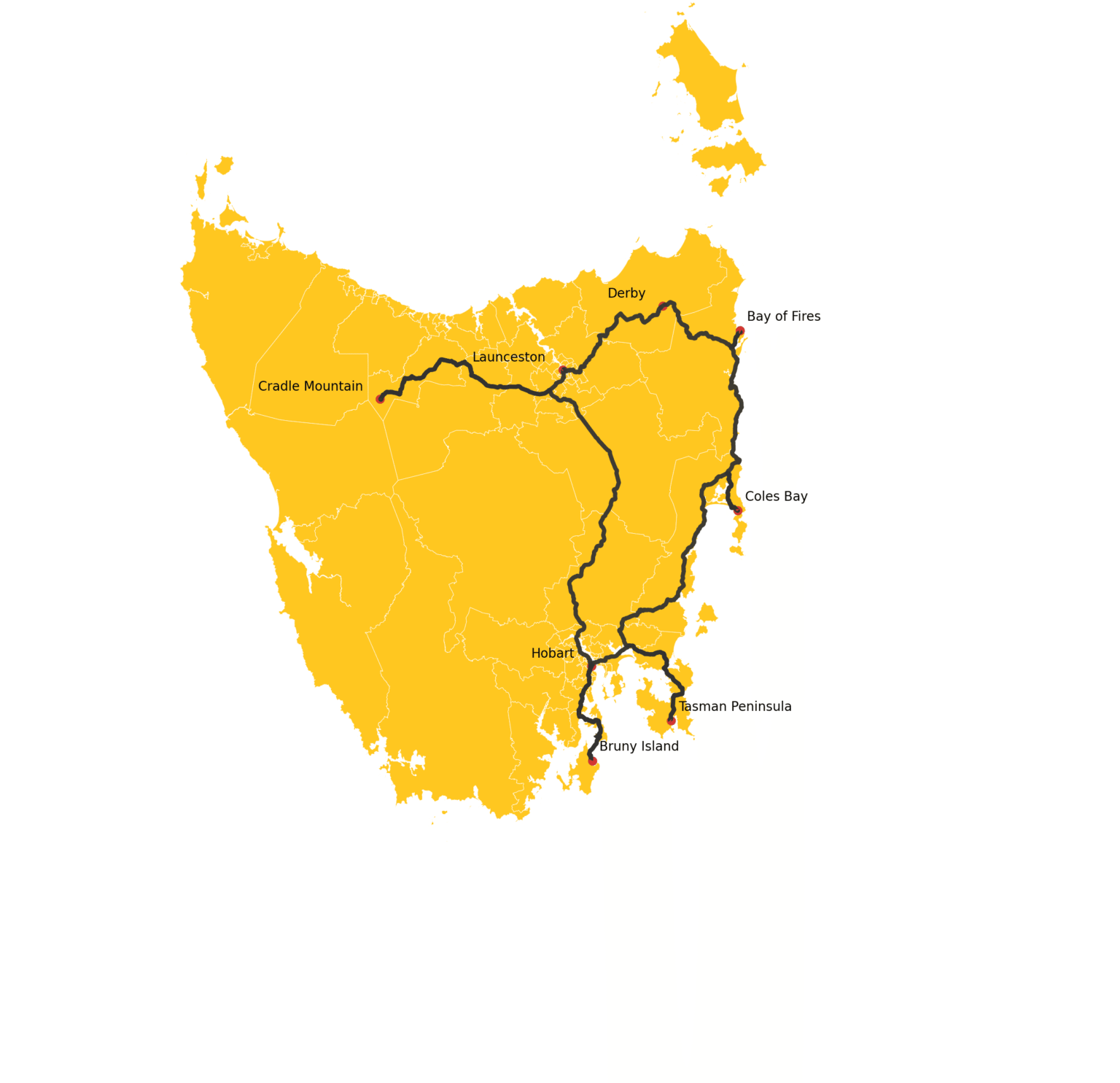
Below you’ll find the full route for this 7-day Tasmania road trip, a loop that covers the island’s most iconic national parks and coastal highlights at a comfortable pace. Most travelers start in Hobart, but because the itinerary is circular, you can easily begin in Launceston if that’s where your flight or campervan rental works best. The drive takes you from Hobart up the east coast to the white-sand bays of Freycinet, and then further north to the orange boulders of the Bay of Fires. From there, the route cuts inland through the northeast forests to Derby and Launceston, before climbing into the alpine landscapes of Cradle Mountain–Lake St Clair National Park. If you have more time, the loop extends to Bruny Island, an easy ferry ride south of Hobart. Whether you’re travelling by campervan or staying in lodges along the way, this route gives you a bit of everything: rugged coastlines, mountain trails, wombat encounters, and some of the clearest night skies in Australia.

Tasmania 1 Week Roadtrip Itinerary

Hobart

Lunch at Farzi
Lunch at Farzi
Salamanca Markets
Salamanca Markets

Hobart feels more like a coastal village than a capital city, small enough to explore in half a day. Start your morning at the Salamanca Markets (Saturdays only) in the old sandstone warehouses, then walk along the waterfront and stop for brunch at Farzi Hobart. Other interesting sights are the Royal Tasmanian Botanical Gardens or head up Mount Wellington for sweeping views over the city. For dinner, Bar Wa Izakaya is our favorite spot, a cosy Japanese fusion restaurant perfect for a relaxed first night. Depending on your schedule, you can stay in Hobart to recover from jetlag or pick up your campervan and begin the road trip straight away.  If you have a few extra hours, visit the Museum of Old and New Art (MONA), one of Australia’s most surprising and provocative modern art museums, reached by a 25-minute ferry ride from the harbor (you can also do this at the end of the trip if you are itching to hit the road!)

Tasman Peninsula

Drive: Hobart → Tasman Peninsula (1h20)

Cape Hauy Track Tasmania
Cape Hauy
Cape Hauy Track Tasmania
Tasman Peninsula

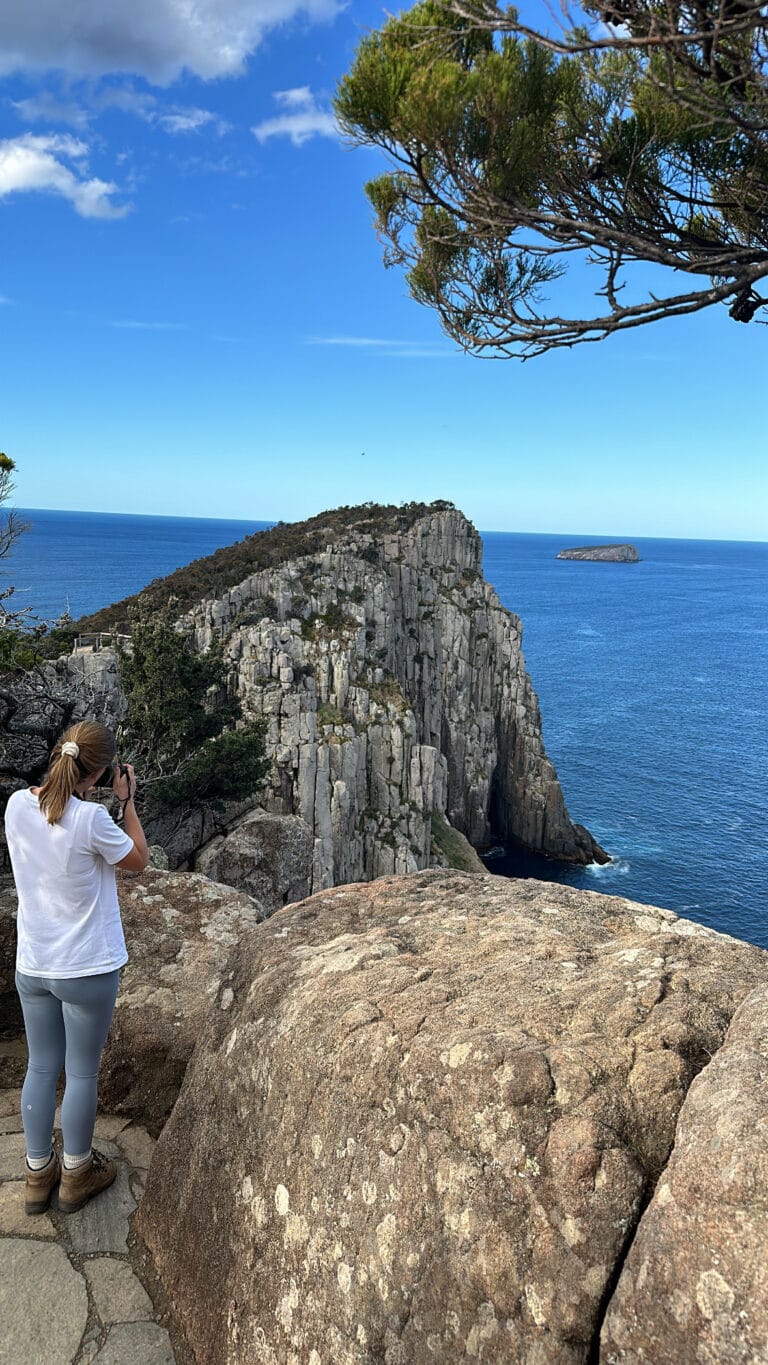
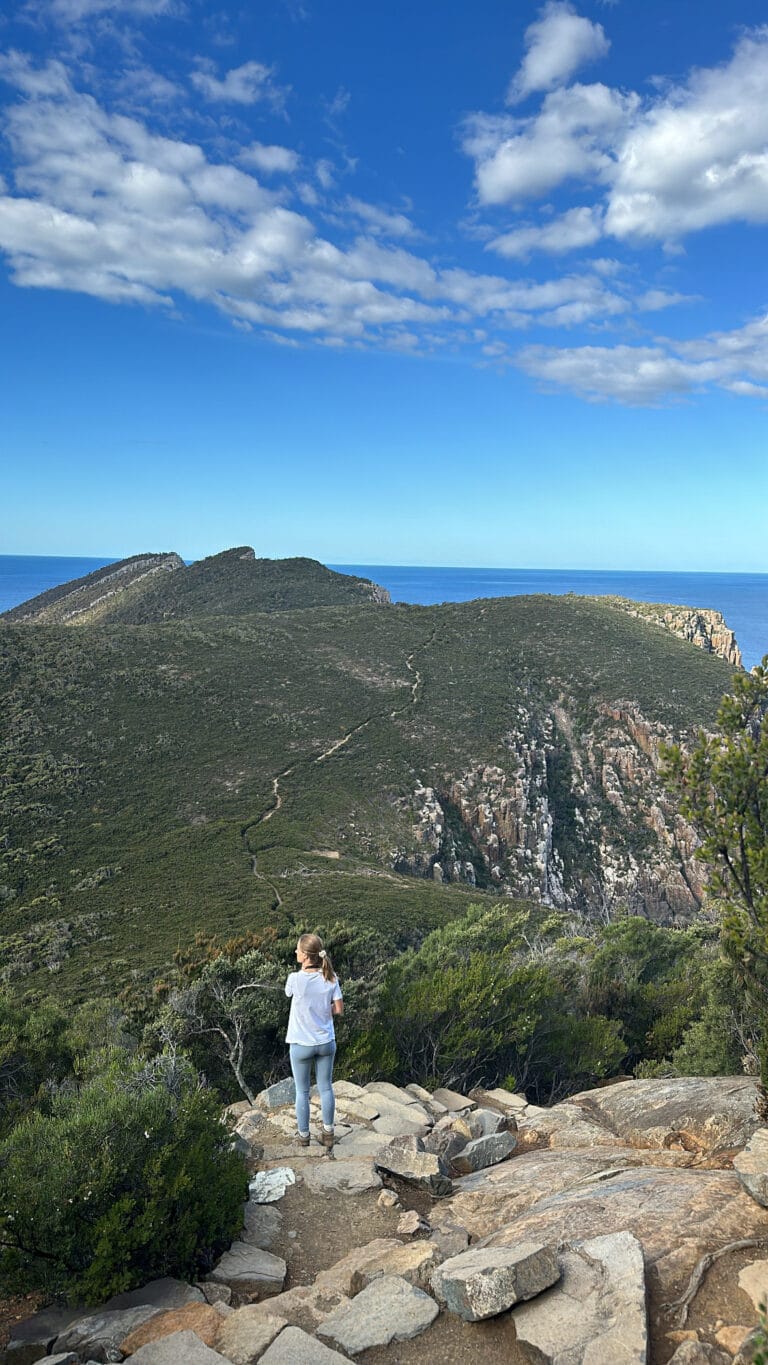
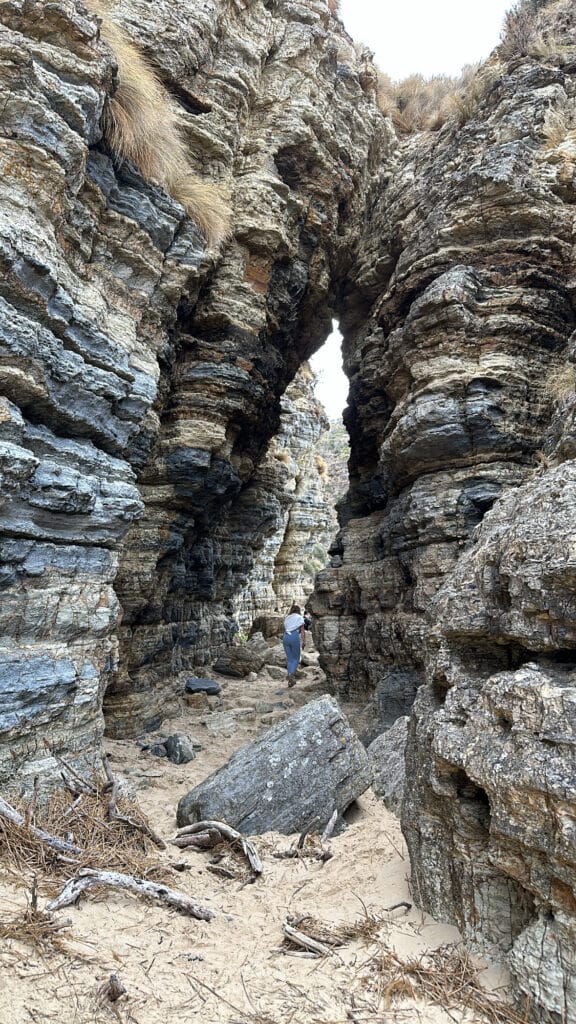
The Tasman Peninsula is often overlooked by travellers, yet it’s a real hidden gem and the perfect introduction to Tasmania’s towering sea cliffs and wild ocean views. Hike the Cape Raoul Track (14 km return) or the shorter Cape Hauy Track, both offering spectacular lookouts over sea stacks and the Tasman Sea. Fortescue Bay Campground makes the perfect base if you’re planning to walk Cape Hauy. Visit the Port Arthur Historic Site, that once served as one of Britain’s toughest 19th-century penal colonies, where repeat offenders were sent for hard labor to learn more about Tasmania’s convict history

Freycinet National Park

Drive: Tasman Peninsula → Freycinet NP (3h)

Mount Amos Freycinet National Park Tasmania
Mount Amos
Wineglass Bay Tasmania
Wineglass Bay

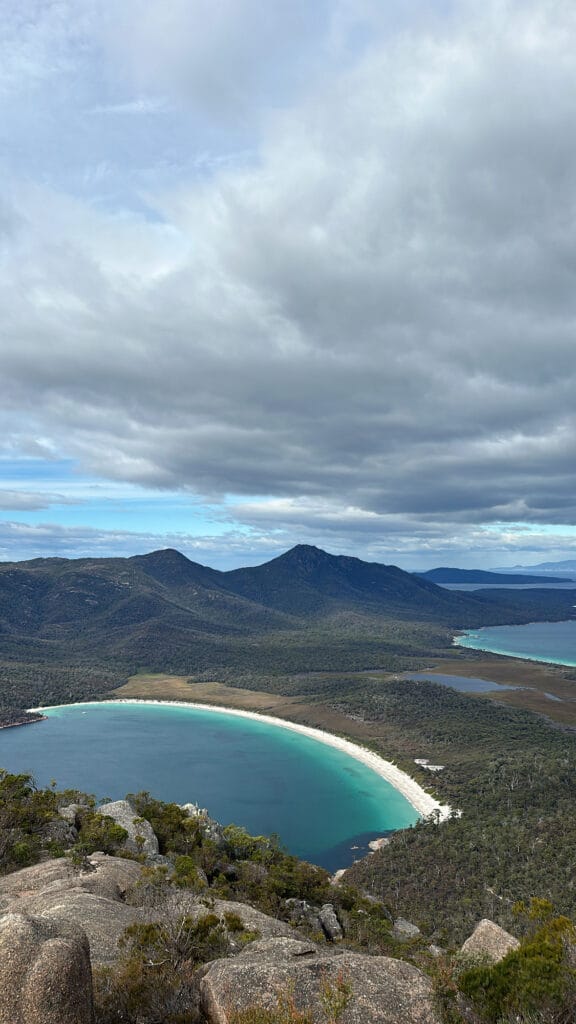
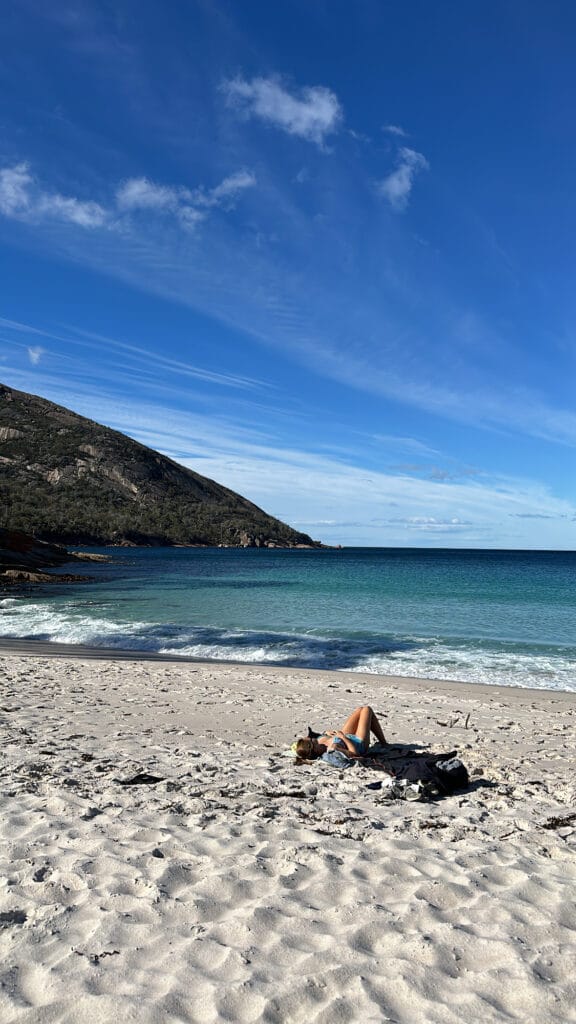
On the drive north you’ll pass Triabunna, where ferries depart for Maria Island, a day trip worth considering if you have extra time, especially for the wombats and wallabies. Freycinet National Park is one of Tasmania’s crown jewels, home to incredible views that probably made you consider Tassie for your holiday in the first place. Park at the start of the Mt Amos Track and hike up first for the panoramic view over Wineglass Bay, then descend to join the Wineglass Bay Track. From here you can walk down to the beach for a swim and well-deserved break, before cutting across to the other side via the Isthmus Track, and looping back via Hazards Beach to the carpark. It’s a full-day adventure, so staying inside or near the park is ideal. The Freycinet National Park Campground is a great option, though it books out quickly. For sunset, Honeymoon Bay was one of our favorite spots, and incredibly peaceful.

Bay of Fires

Drive: Freycinet → Bay of Fires (1h30)

Bay of Fires Tasmania
Bay of Fires
Binalong Bay Tasmania
Binalong Bay

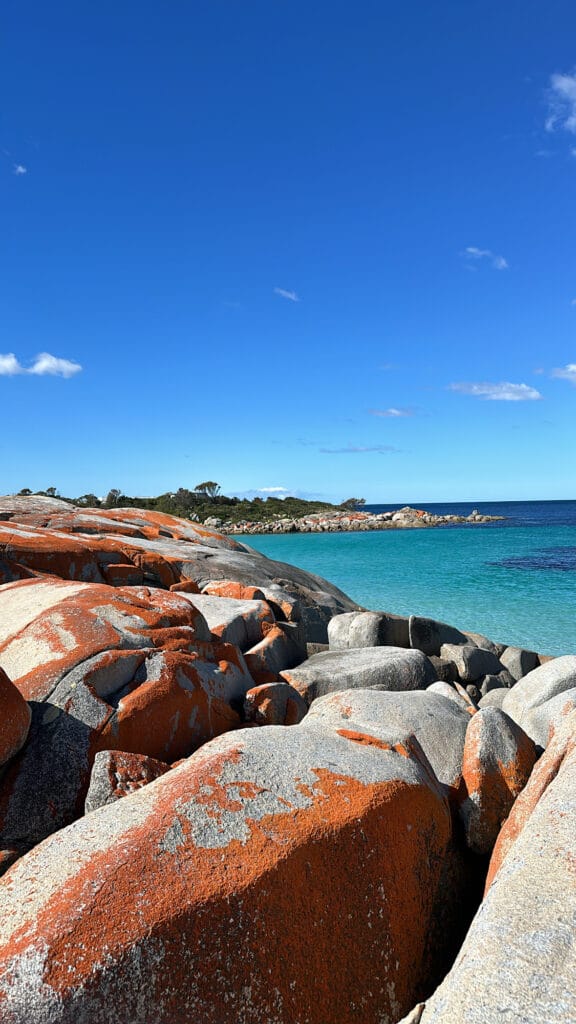
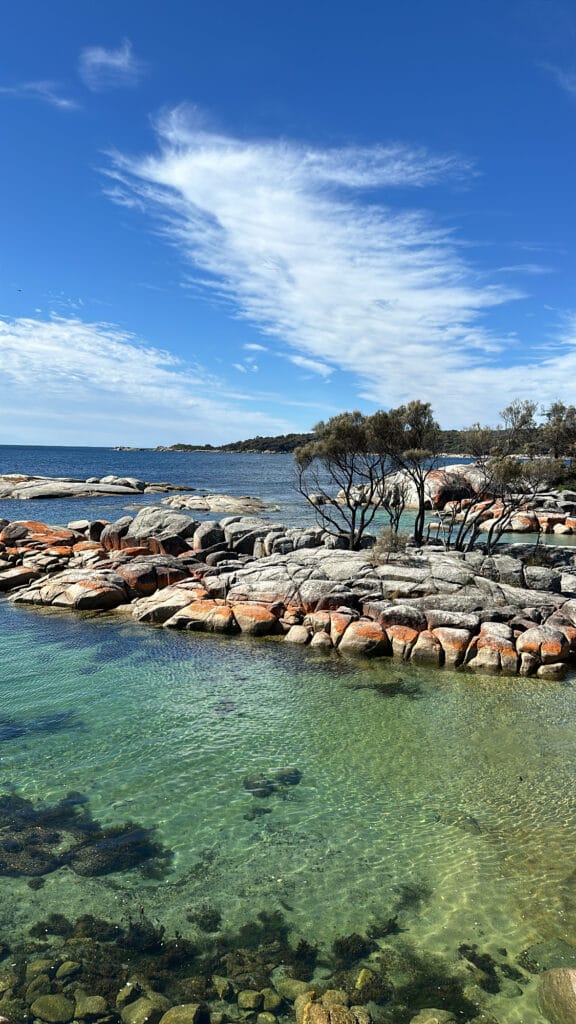
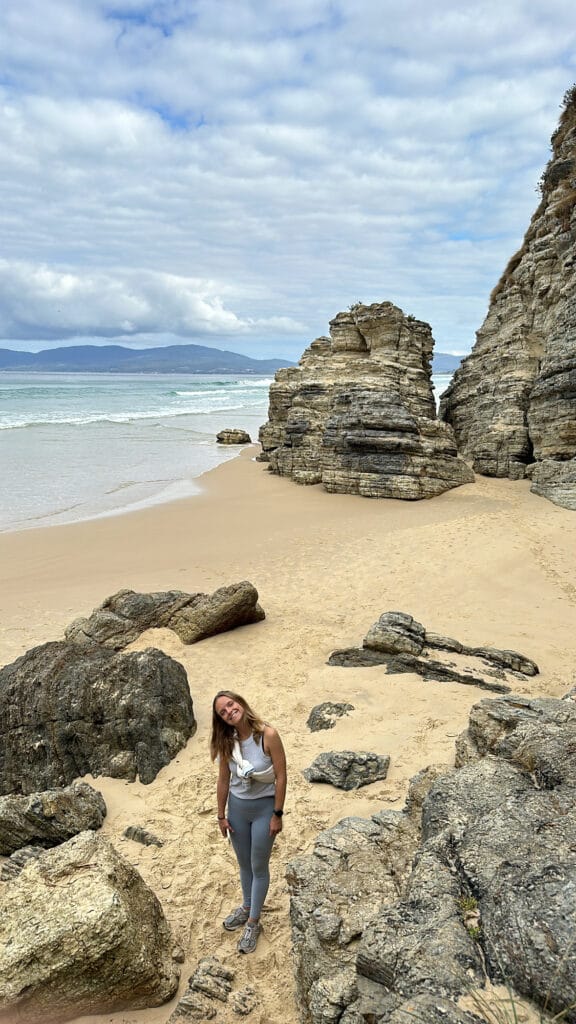
On the drive north you’ll pass the small coastal town of Bicheno, where you can check out the ocean blowhole, not the most spectacular, but a fun way to break up the drive! As you continue, the road leads into the Bay of Fires, a long stretch of coastline where orange lichen-covered boulders contrast beautifully with white sand and crystal clear water. The southernmost access point and main town is Binalong Bay, where you’ll get your first impression of the colors as you walk along the shoreline towards Skeleton Point. If you’re camping, Sloop Reef Campground is a great place to base yourself. It’s popular, so secure your spot early. There’s no single lookout or “main spot” in the Bay of Fires, which makes the place feel incredibly peaceful and authentic. The best way to experience it is to hike from bay to bay, climbing over boulders and wandering along the beaches. The 7.5km stretch between Sloop Reef and The Gardens is beautiful, and if you don’t feel like walking the same way back, you can always hitchhike!

Derby and Launceston

Drive: Bay of Fires → Derby (1h20)  → Launceston (1h30) → Cradle Mountain (2h)  

Floating Sauna lake Derby Tasmania
Floating Sauna lake Derby
Gairdner Campground Tasmania
Gairdner Campground

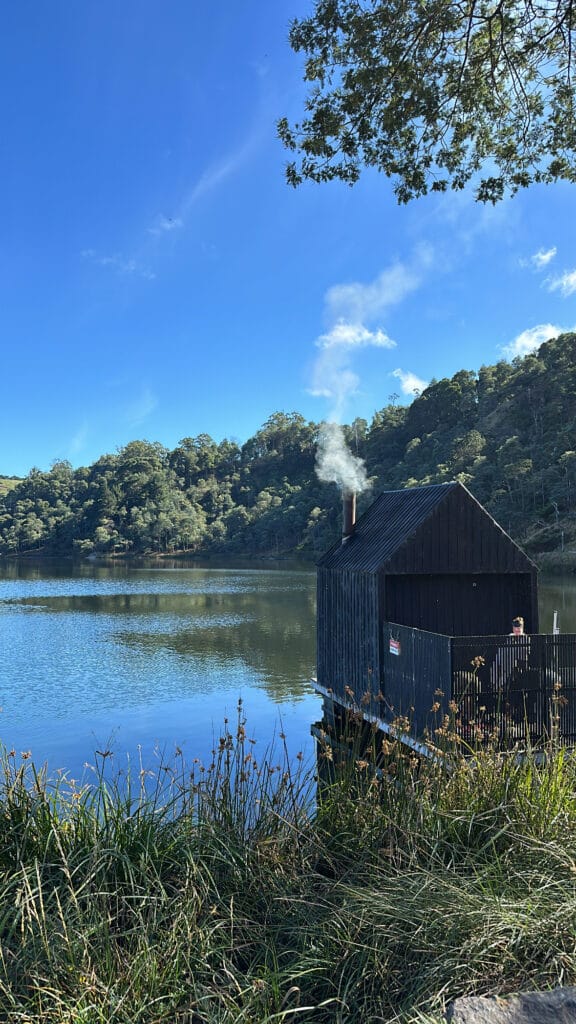
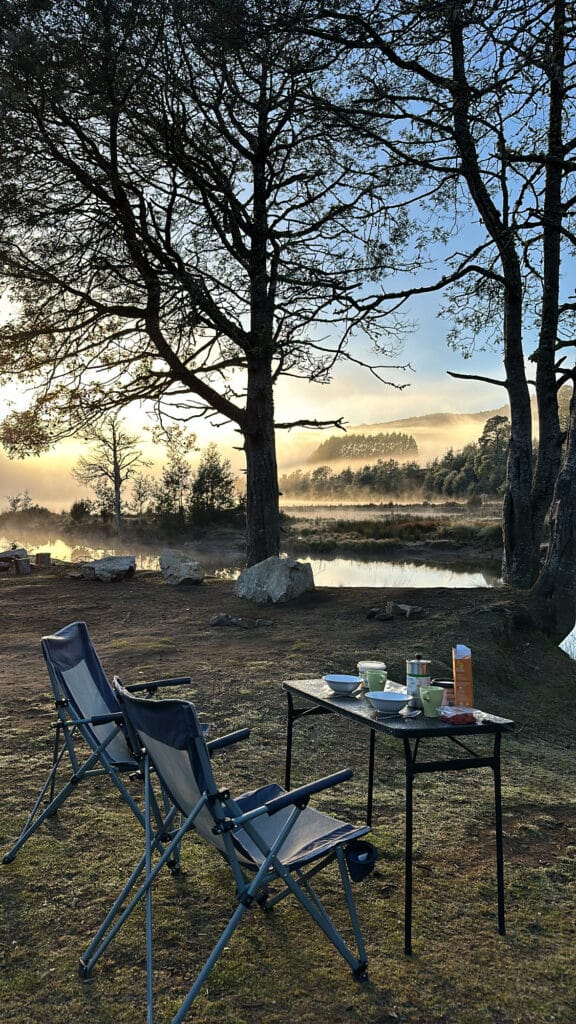
The drive inland towards Cradle Mountain is long, so it’s worth breaking it up with a 25-minute detour to Derby, 1h20 from Sloop Reef. Here you’ll find the floating sauna, a scenic spot where you can heat up, then jump straight into the freshwater lake. From Derby it’s about 1.5 hours to Launceston, a handy place to restock on groceries, stretch your legs along the harbour, and fuel up before heading into the more remote Cradle Mountain region. After leaving Launceston, we made another short detour to Latrobe, known as the “Platypus Capital of the World,” unfortunately we stared at the water for about an hour without any luck. We ended the day at Lake Gairdner Campground, where, to our surprise, a platypus surfaced right beside our campsite. If you stay here, keep your eyes on the water at dusk, you might get lucky too!

Cradle Mountain

Lake Wilks Tasmania Cradle Mountain
Wombat Pool Tasmania Cradle Mountain

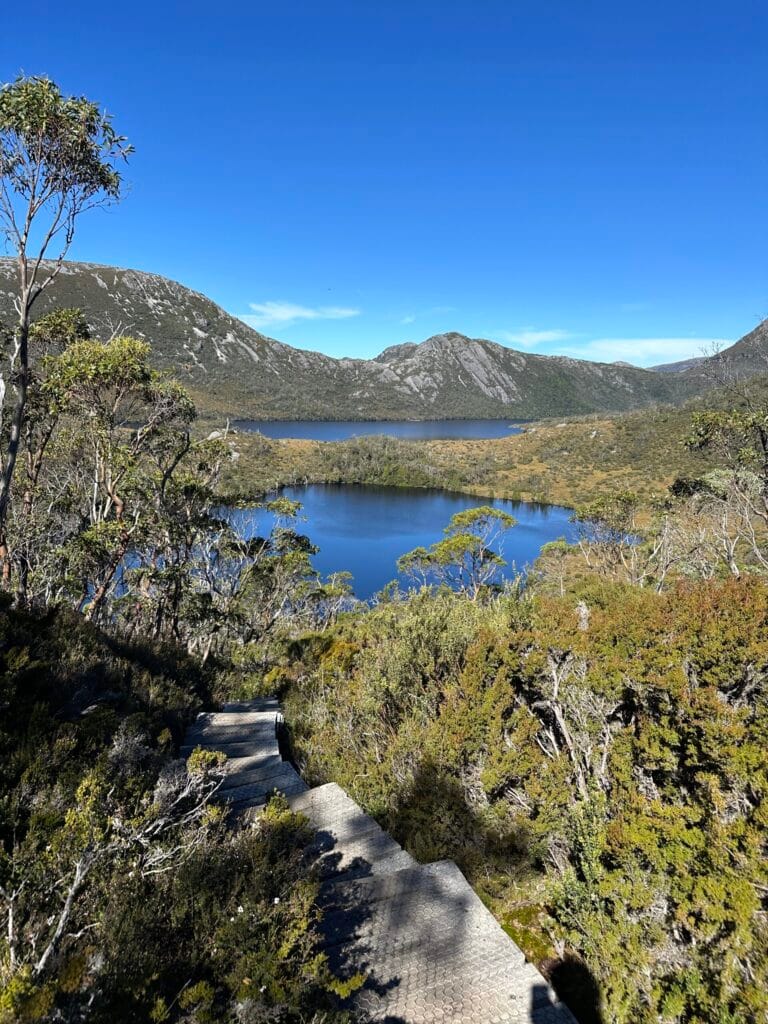
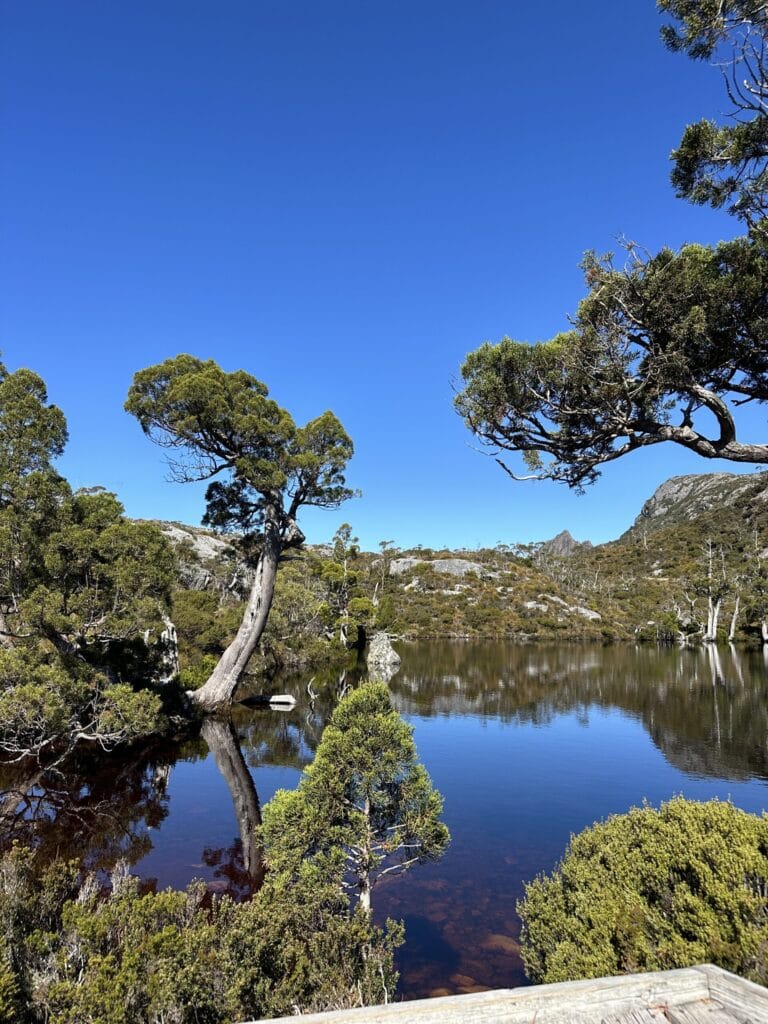
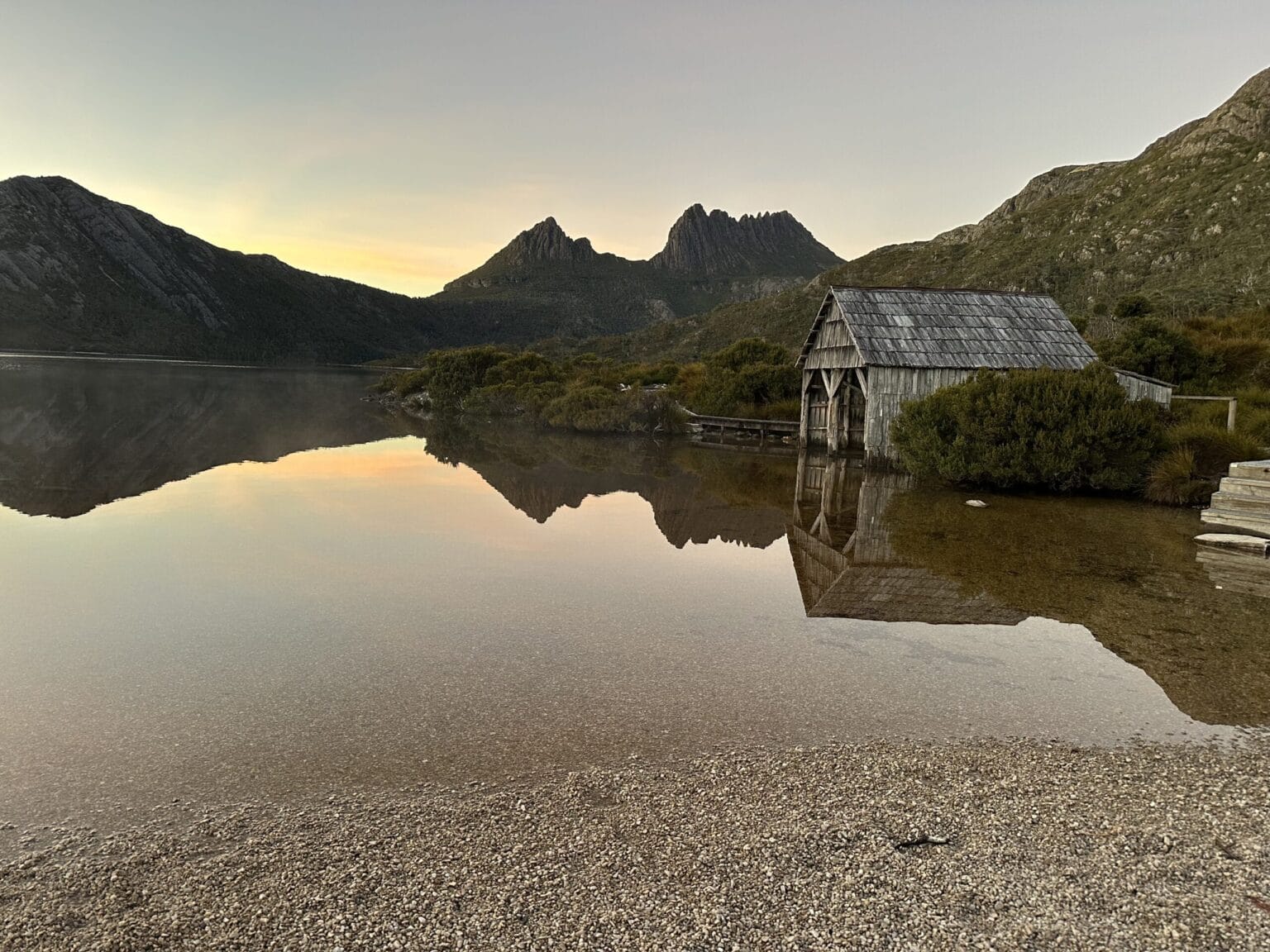
Cradle Mountain is best enjoyed early, before the crowds arrive. If you arrive outside the shuttle bus hours (8 am–6 pm in summer, 9 am–5 pm in winter), you can drive directly to the Dove Lake carpark. With only nine parking spots, it’s best to get there around sunrise, when you’ll often see Cradle Mountain reflected perfectly in the water. The park has a number of trails, but we combined the highlights into a 6–8 hour loop that links Lake Wilks, the Cradle Mountain summit (1,545 m), Marion’s Lookout and Wombat Pool.

Lake Lilla Track Cradle Mountain Tasmania
Lake Lilla Track
Wombats at Ronny Creek Cradle Mountain Tasmania
Wombats at Ronny Creek

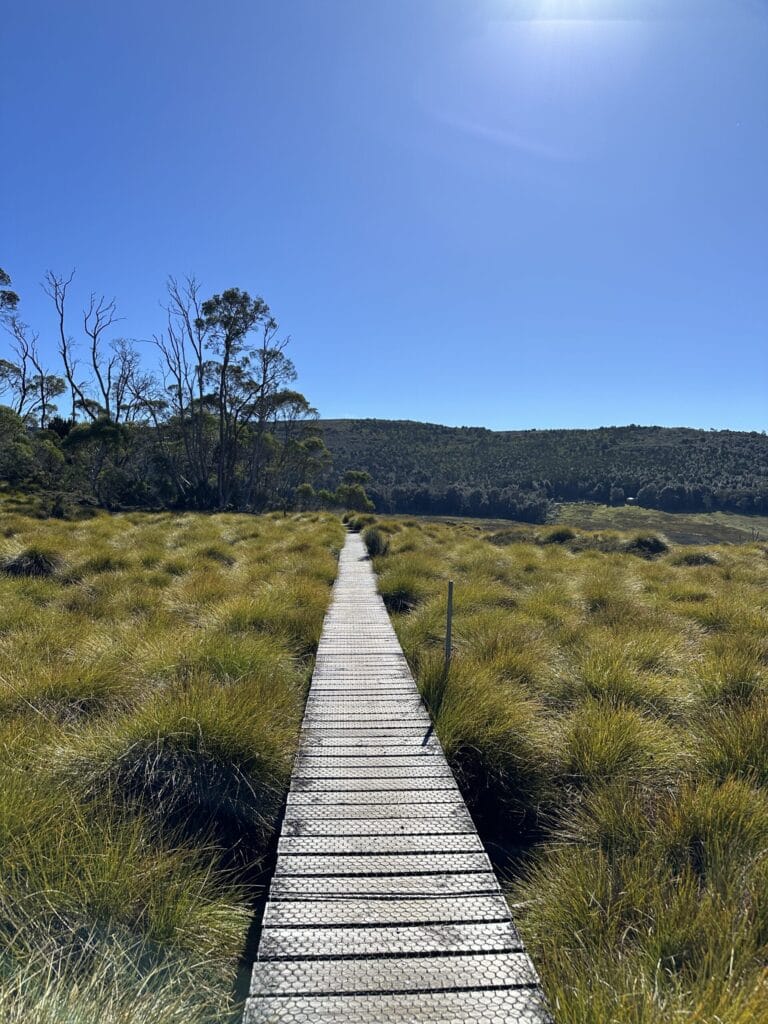
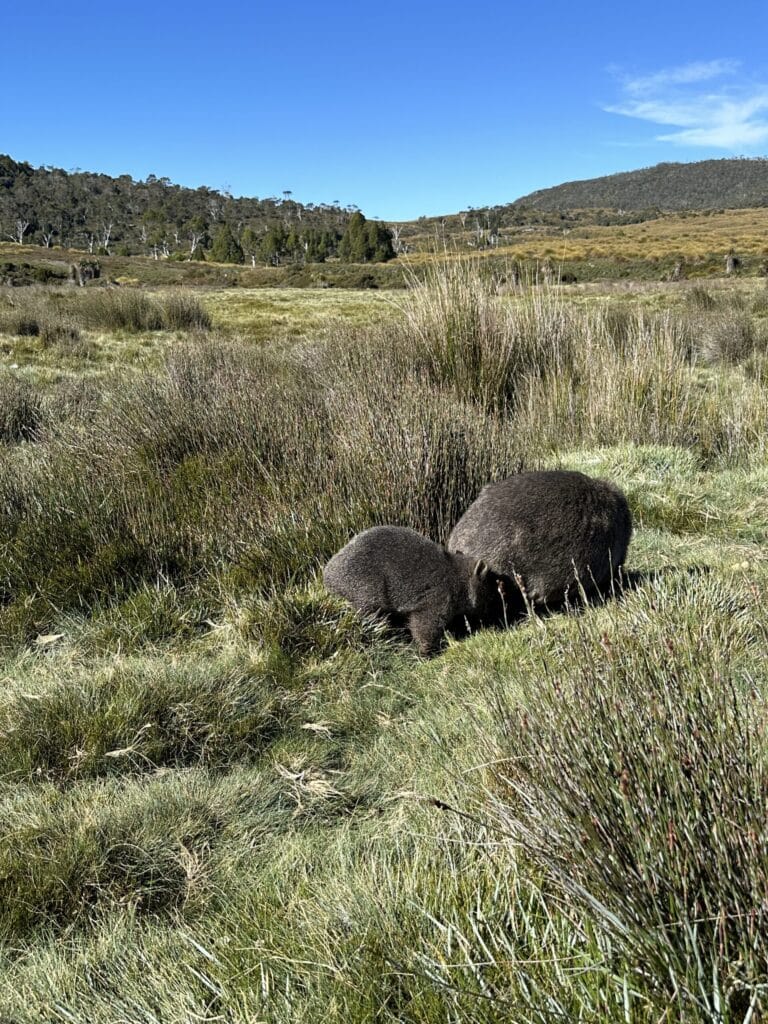
From the boatshed, walk along the like until you see a sign for the Lake Wilks Track, then continue towards Cradle Mountain Summit for incredible views over the national park. If you’d prefer something easier, the Dove Lake Circuit is a mostly flat 2-hour walk that still delivers classic Cradle Mountain scenery. After the summit, descend via Kitchen Hut and Marion’s Lookout, then follow the track past Wombat Pool and along Lake Lilla. At the junction you can return directly to the Dove Lake carpark, or continue to Ronny Creek, where wombats often graze near the boardwalk. There’s a carpark there too if you finish your loop elsewhere. The shuttle bus is frequent and reliable, and you can fuel up at Cradle Mountain village before or after your hike.

Back to Hobart

Drive: Cradle Mountain → Hobart (4h)

Tasmanian Devils Trowunna Tasmania
Tasmanian Devils at Trowunna
Trowunna Wildlife Sanctuary Tasmania
Trowunna Wildlife Sanctuary

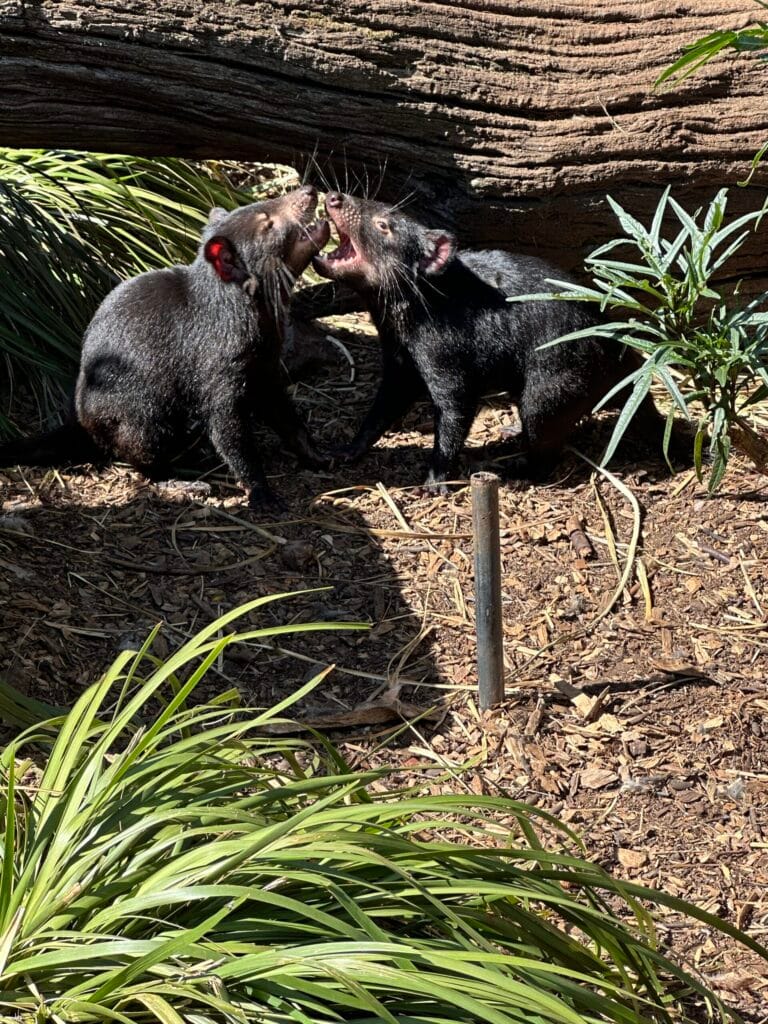
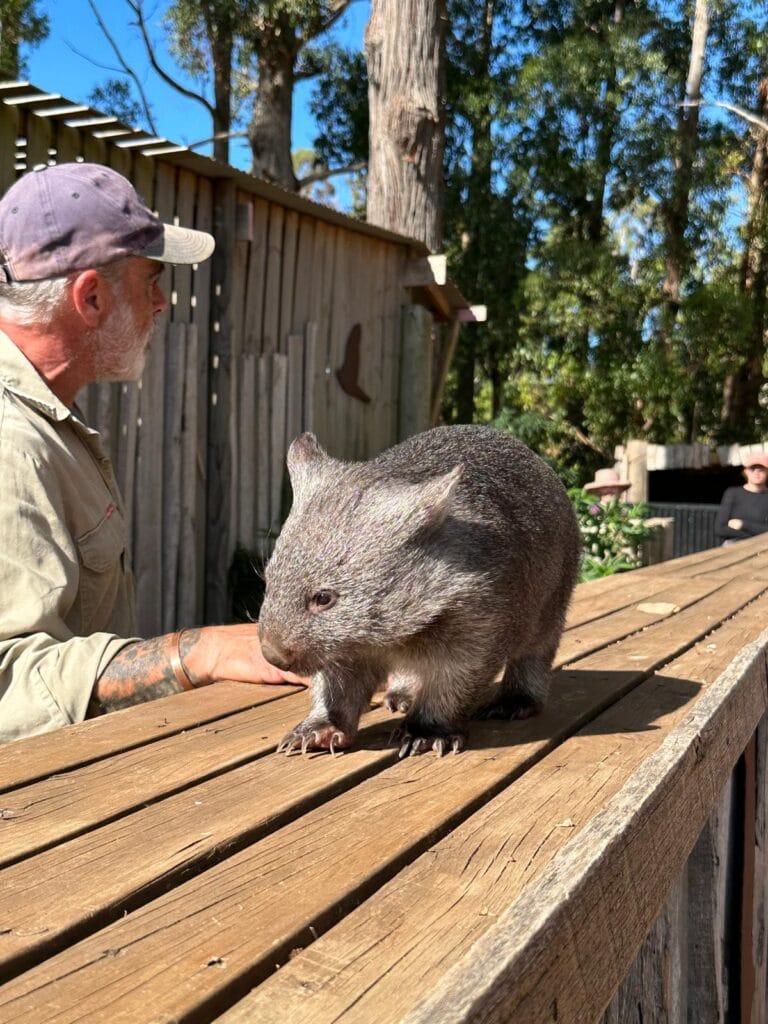
It’s about a 4-hour drive from Cradle Mountain back to Hobart, but there are plenty of fun stops along the way. The first section passes truffle farms and small wildlife sanctuaries. One of our favourite stops was Trowunna Wildlife Sanctuary, where you can see rescued Tasmanian devils up close (you’re very unlikely to spot them in the wild) and watch how attached the orphaned wombats are to their caregivers. Continuing south, the road takes you through the Central Plateau along the edge of the Great Lake, with stunning viewpoints to pull over and take in the open highland scenery. If you skipped MONA when you first arrived in Hobart, this is your second chance! For camping, the Lea Campground just south of Hobart is a convenient spot to spend the night (open December to March).

Bruny Island

Drive: Hobart → Bruny Island (~1h)

Mars bluff Track Bruny Island Tasmania
Mars bluff Track Bruny Island
Blighs Rocks Bruny Island
Blighs Rocks

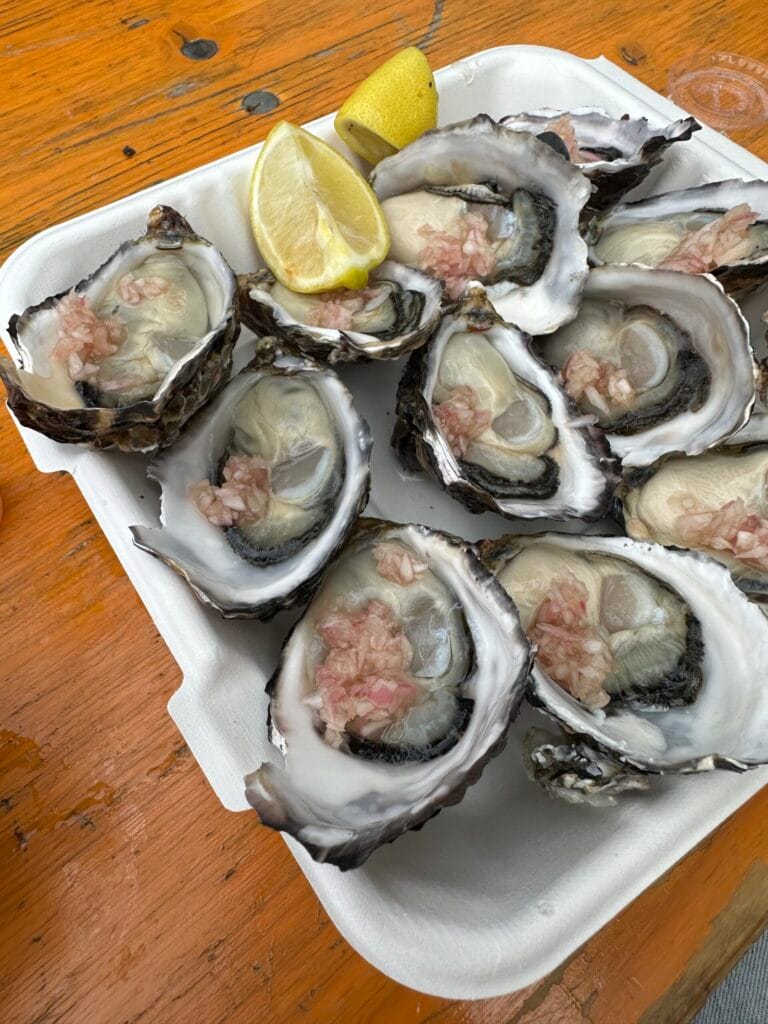
If you have an extra day, Bruny Island is a great addition to the trip, just a 20-minute ferry from Kettering. Soon after arriving you’ll pass Get Shucked, whose oysters you may have already tried at the Salamanca Markets. A nice first stop on the north side is the Mars Bluff Track, part of the Cape Queen Elizabeth trail, where you’ll walk through beautiful seaside cliffs. Further south, the Truganini Lookout offers stunning views over “The Neck”. Just below the lookout is the penguin viewing platform, where little penguins return to their burrows at dusk between September and March. On the southern half of the island, Adventure Bay is the main town, and the starting point for the Fluted Cape Walk, another beautiful cliffside trail.